

Gynecomastia (Male Breast Reduction) near Fort Lauderdale, FL
“Man boobs” are one of the most embarrassing cosmetic problems experienced by men, and diet and exercise cannot remedy the problem in many cases. Dr. David J. Levens, a board-certified plastic surgeon, performs surgery for gynecomastia, the condition that causes enlarged breasts in men in the Fort Lauderdale and Broward County areas.
What is Gynecomastia?
Gynecomastia is a medical term that originates from the Greek words for “women-like breasts.” The condition often results in embarrassment, teasing, and social trauma, especially for teens and younger men, leading many to wear heavy, loose-fitting shirts and avoid sports and bare-chested activities.
Sufferers may find some comfort in the fact that they are not alone. Gynecomastia is present in an estimated 40 to 60 percent of the male population. It may affect only one breast or both. Certain drugs, such as anabolic steroids, medications containing estrogen, alcohol, and marijuana, may cause or contribute to enlarged male breasts. So might some medical conditions including cancer and impaired liver function. However, it is widely accepted in the medical community that a large percentage of cases occur for unknown reasons.
Excess fat or glandular tissue, especially along the lower breast, are the culprits, creating a “female” contour. Diet and exercise can help with generalized fat, but cannot be directed to the specific shape of the chest fat. Neither diet nor exercise will help reduce excess glandular tissue. Indeed, as muscle beneath the breast is built up as with chest exercises, the overlying fat and glandular tissue is pushed further forward and may become more noticeable.
How Much Does Male Breast Reduction for Gynecomastia Cost?
The cost of Gynecomastia starts at $5,200.00. However, prices may vary due to specials and/or the facility used. An individual treatment plan will be developed during your consultation with Dr. Levens. After the appointment, we provide you with a total cost and explain our payment options, including cash, personal check, Visa®, MasterCard® and American Express®. If you are interested in financing your male breast reduction for gynecomastia, our patient coordinators will explain how to apply for CareCredit®, Alphaeon Credit, or Prosper® Healthcare Lending.
Benefits of Male Breast Reduction
Male breast reduction removes excess breast tissue and fat that gives male breasts an enlarged and feminine appearance. For most men, the surgery offers a welcome relief from living with “man boobs” that make them feel less masculine.
Good Candidates for Male Breast Reduction
The best candidates for male breast reduction are:
- Those who have firm, elastic skin that will reshape to the body’s new contours
- Healthy men of any age
- Males who are mature enough physically and emotionally to handle it
Although male breast reduction can be performed on teenagers, gynecomastia often resolves itself without surgical treatment by age 18 or 19, so patients are well advised to wait until then unless the condition is causing major emotional trauma. A free consultation with Dr. Levens can give both the patient and his parents the guidance they need to make an informed decision.
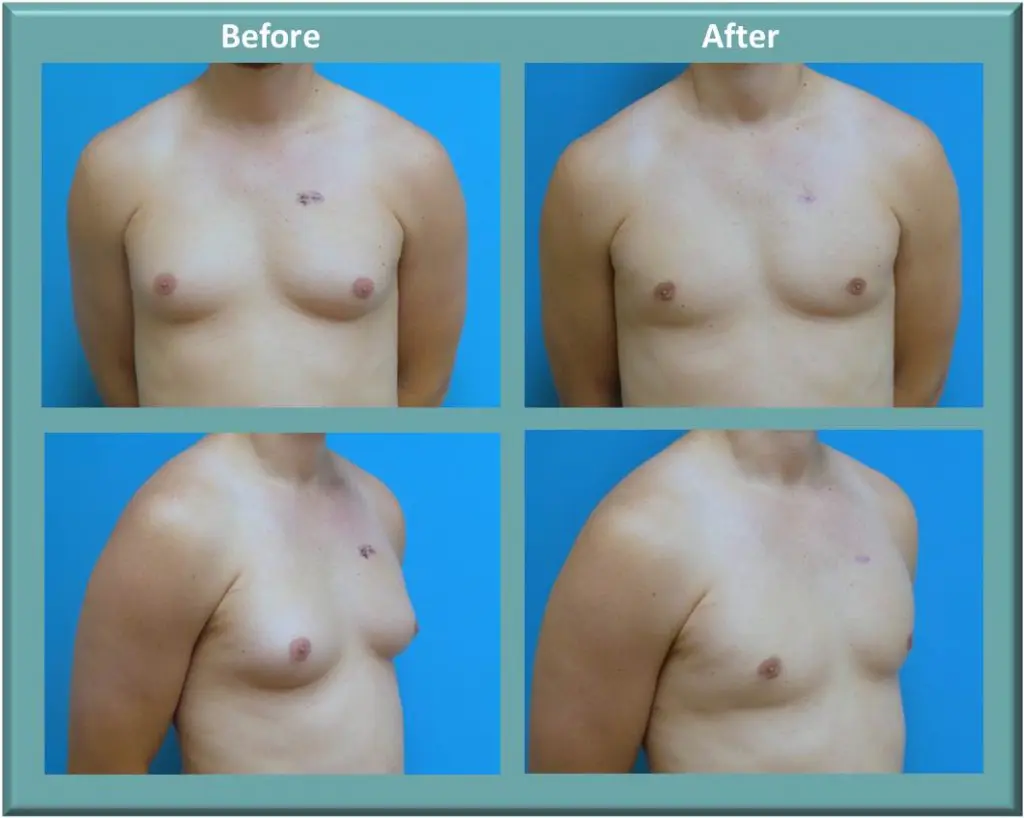
Gynecomastia Before and After Photos in Fort Lauderdale, FL
 Click Here to View More Before and After Photos
What Happens During Male Breast Reduction?
Depending on the nature and extent of the gynecomastia, enlarged male breasts can be reduced by liposuction and/or by cutting out excess glandular tissue and/or skin. The procedure typically takes about two hours, on an outpatient basis, using general anesthesia.
In cases where male breast enlargement is caused only by fatty tissue and does not involve excess glandular tissue and skin, liposuction alone may be sufficient for male breast reduction. Tiny incisions are made near the nipple; fat is suctioned out through a very narrow cannula (tube). In such cases, scars will be small and barely visible. Results are permanent, although subsequent obesity can recreate a gynecomastia-like effect.
If the problem is being caused not just by fatty deposits but by excess glandular mass as well, the excess tissue is removed through an incision at the lower edge of the areola. This sometimes causes a crater effect and must be contoured carefully, usually along with liposuction of the surrounding fat. In rare cases of excess skin, incisions are made around and beneath the areola as with a female breast lift or reduction.
Special Considerations for Gynecomastia Patients
Some patients experience temporary numbness or lack of sensation in the breast area that can last up to a year. Infrequent complications, associated with many surgical procedures, include possible infection, skin damage, fluid accumulation, bleeding, and scarring or pigment changes. Post-operative asymmetry, while rare, is possible. When that occurs, a second procedure may be needed to remove additional tissue and create better balance.
Recovery after Male Breast Reduction
There is little downtime after this procedure and patients typically return to work within one week unless the work is extremely strenuous. There will be scarring around the nipple, but it will fade over time. There will be some post-operative bruising, swelling, and burning sensation. To assist with the healing process, the patient will wear an elastic pressure garment for three to six weeks and must avoid exposing scarred areas to the sun for at least 6 months.
Dr. Levens works with Contour MD to offer garments for patients to wear after plastic surgery in Coral Springs.
Post-recovery, the patient enjoys a firmer, flatter, more contoured chest which fits the standard “male profile”. Subsequent exercise to tone the breast muscles will produce even greater improvement.
Learn More about Male Breast Reduction for Gynecomastia
Dr. Levens will review every aspect of male breast reduction for gynecomastia with you during your complimentary consultation. Patient Coordinators Diana and Chris will discuss fees, financing plans, and scheduling, and answer any additional questions. There is absolutely no obligation to schedule a procedure. To arrange your consultation, please contact us today.
Dr. Levens has been providing male breast reduction for gynecomastia for men in Coral Springs, Fort Lauderdale, and throughout Broward County since 1989.